

Aer Lingus Is Shrinking – Does That Fix What Made It Vulnerable?
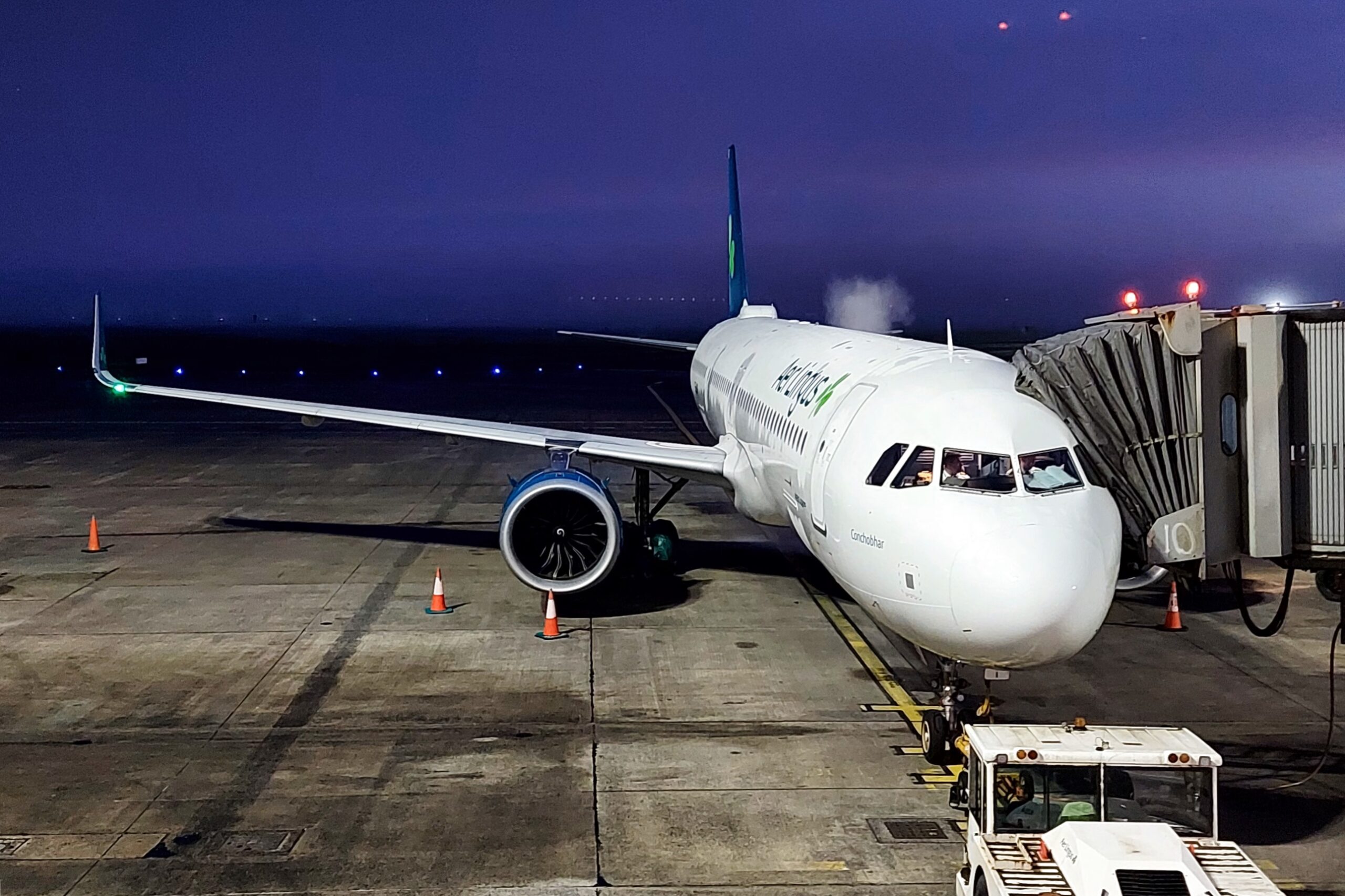
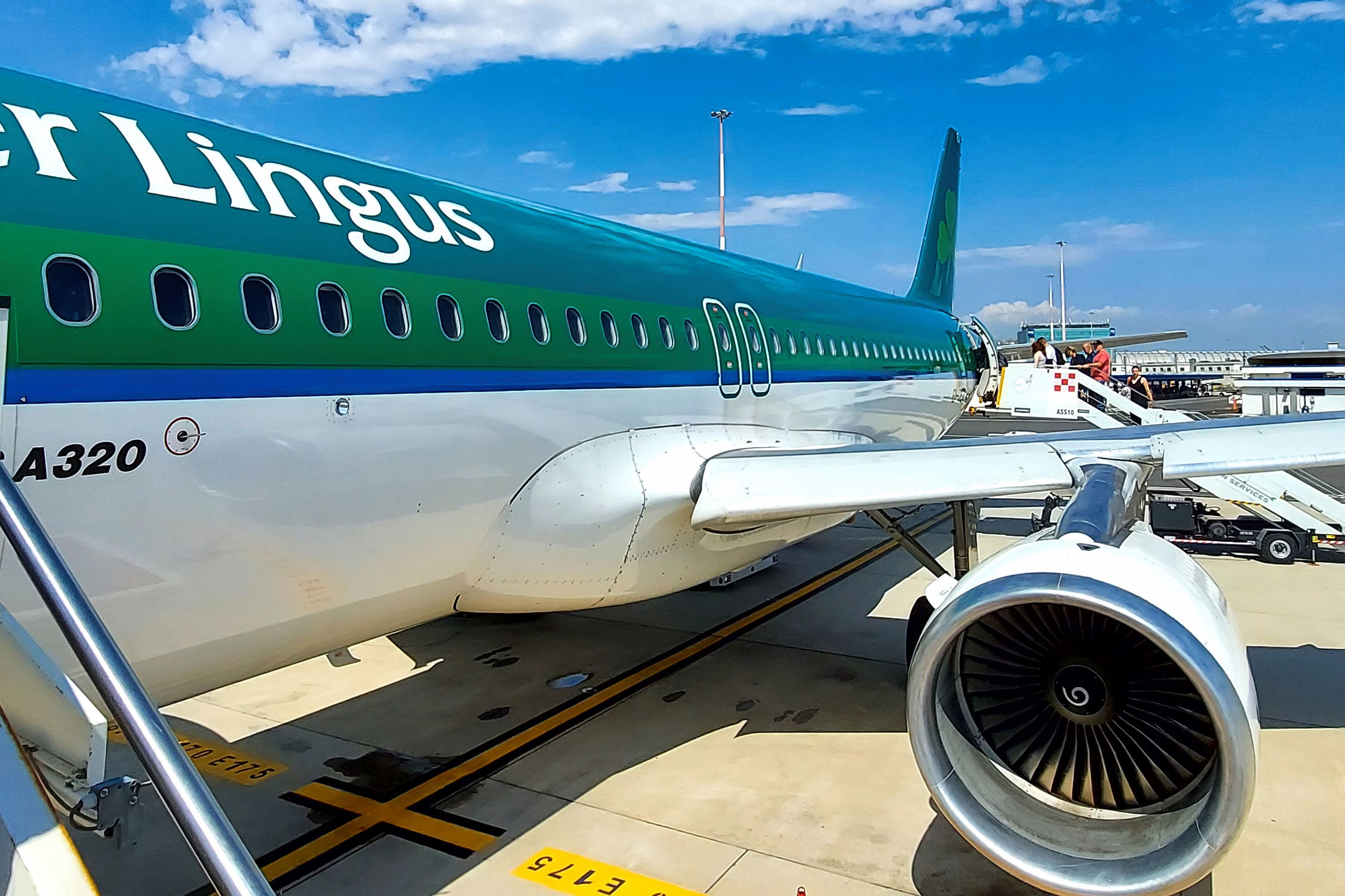
Aer Lingus, my home carrier and the one we travel easily the most frequently with every year, has announced this morning that up to 500 jobs could be lost as part of a major restructuring of the airline, including a reduction in overall flying capacity by 6%, the grounding of two Airbus A330s and four Airbus A320s during next summer’s peak season, and significant changes to its network.
Dublin routes to Las Vegas, Denver and Minneapolis are to be cut, Seattle will become summer-only, while Frankfurt, Hamburg and Malta will also lose their year-round services.
The sheer scale of potentially 500 people facing the loss of their livelihoods, to me at least, is so stark as to merit scrutiny over the decision-making, what led to this point, and whether subtraction of staff, flights, routes and aircraft, as it’s being positioned, is the sole remedy.
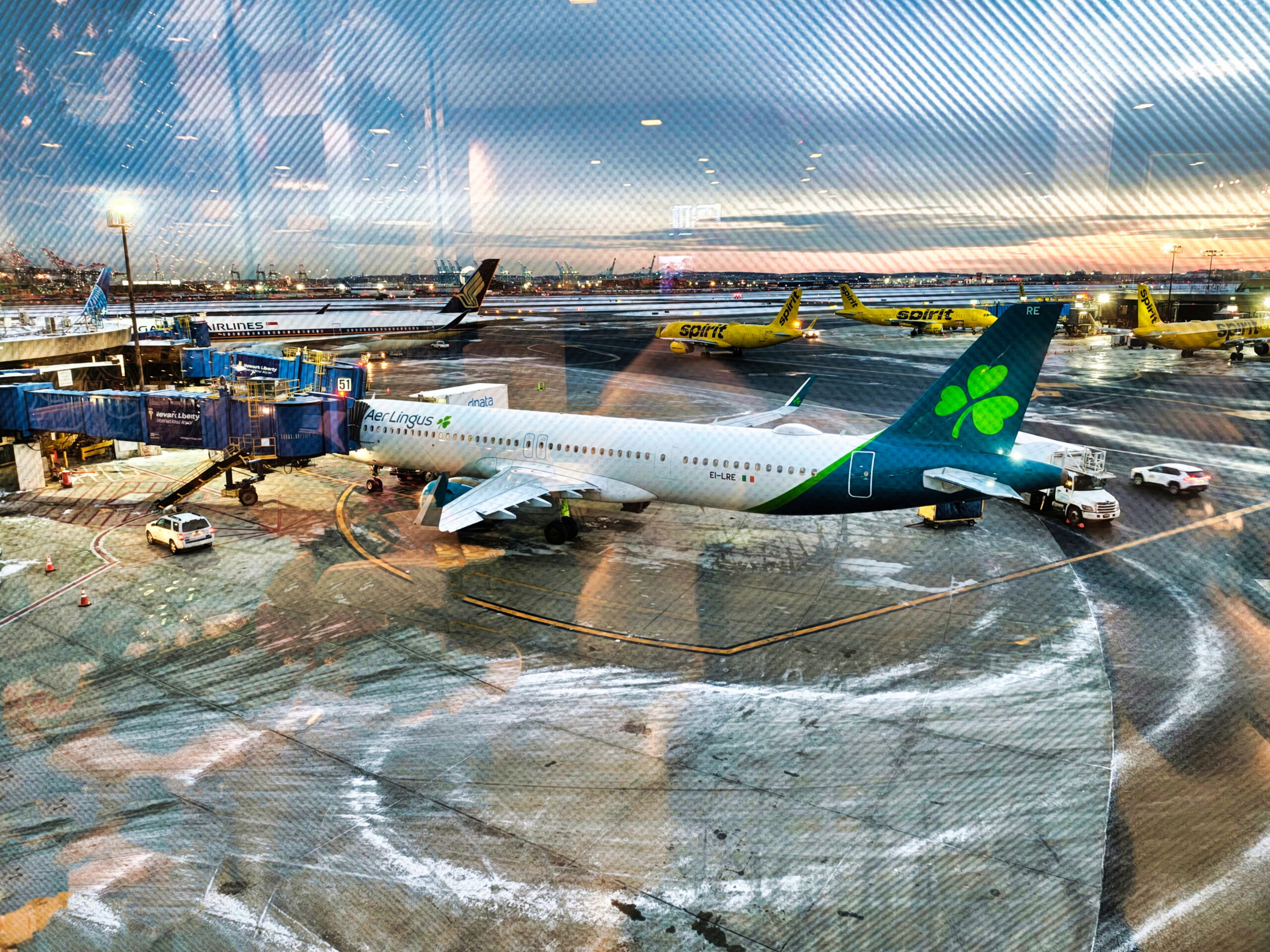
The airline lost €103 million during the first quarter of this year, although the first three months are traditionally loss-making for many European airlines, while its parent company IAG expects the airline to achieve an operating margin of between 12% and 15% in order to attract further investment. Uncomfortably, and less reported, however, is that they did make an operating profit of €282 million last year, with a margin of just over 11% – not poor at all for a carrier in such allegedly bad shape.
It’s a complete opinion on my part, but I would contend that Aer Lingus has spent much of the past decade aggressively expanding across North America, while allowing significant parts of the product and experience supporting that expansion to stand still. It has added routes faster than it has modernised its business class, failed to introduce premium economy while virtually every meaningful competitor did so, and continued selling supposedly premium connecting journeys without offering a consistent business class product within Europe or in many cases, on their partners on the other side of the Atlantic.
At the same time, many fairly obvious opportunities to earn additional revenue from passengers who are actively willing to spend more remain either unavailable, inconsistent or unnecessarily difficult to purchase.
Aer Lingus may well need to reduce costs and no doubt some routes simply don’t pay their way – but surely reducing costs is not, by itself, a strategy?
Ironically, Aer Lingus appears to have pursued growth before fixing the fundamentals. Network expansion is exciting, generates headlines and creates the impression of momentum. Product modernisation, digital retailing and ancillary improvements are slower, less glamorous projects that rarely make the front page. Yet when demand weakens, it is often those quieter investments that win customer choice going forward.
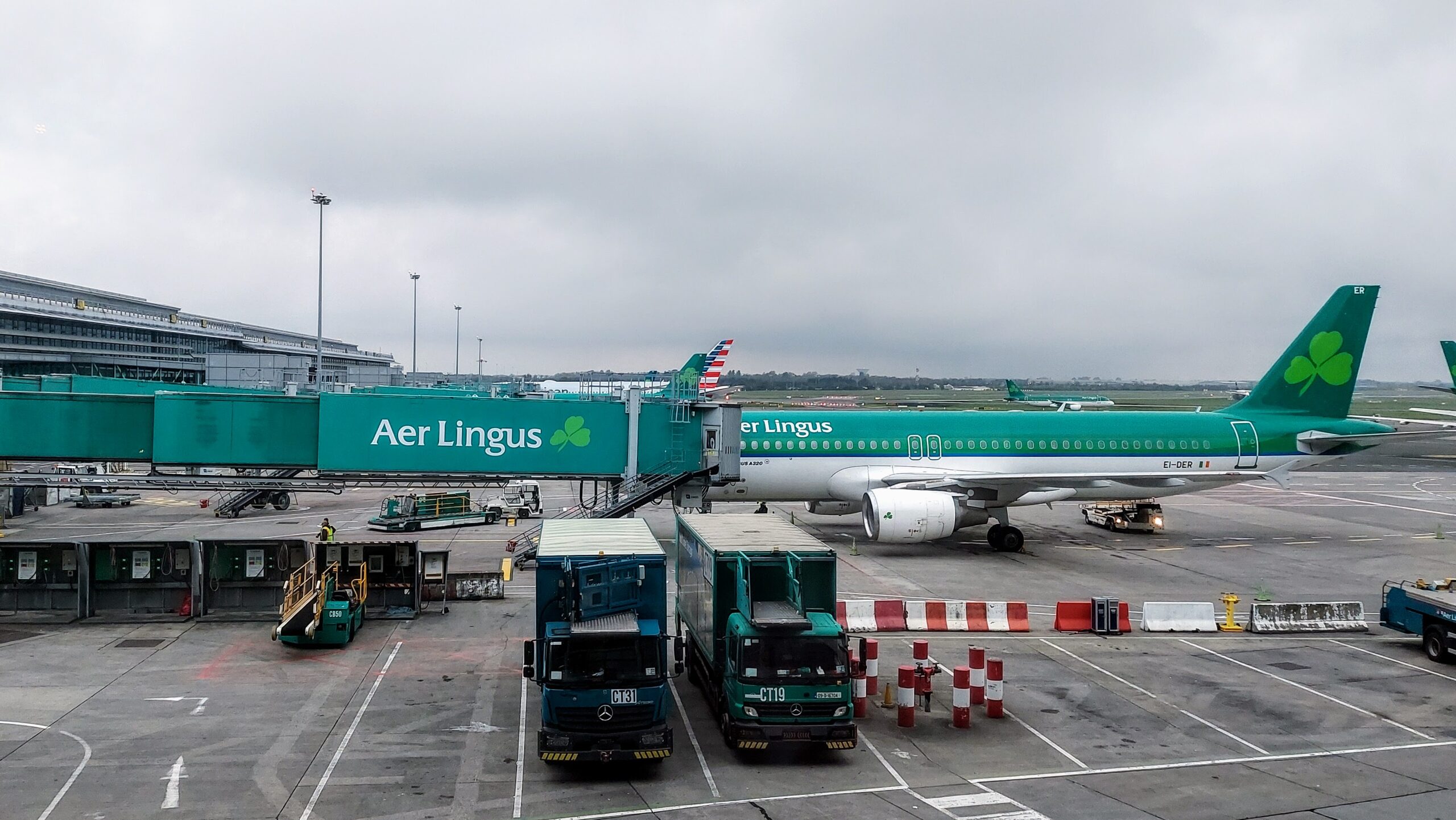
Too Much Reliance On North America
Aer Lingus, historically, has had many advantages in terms of transatlantic operations; pre-clearance availability, a large diaspora in the US, tech companies at both ends, and relatively shorter sector durations than mainland Europe. The addition of the A321LR and A321XLR’s have allowed Aer Lingus to open up new routes into increasingly secondary and tertiary US cities that would never have supported a larger Airbus A330.
The problem is that Aer Lingus appears to have become increasingly dependent on one geographic market at precisely the time demand has dropped (at least on this side of the ocean), and competition within that market has intensified.
US airlines have also significantly expanded in Dublin. They have large domestic networks at the other end of the journey, substantial corporate contracts, enormous loyalty programmes, proper alliance memberships and reciprocity (not byzantine partnerships with two other carriers only – BA and AA) and, in many cases, newer premium products.
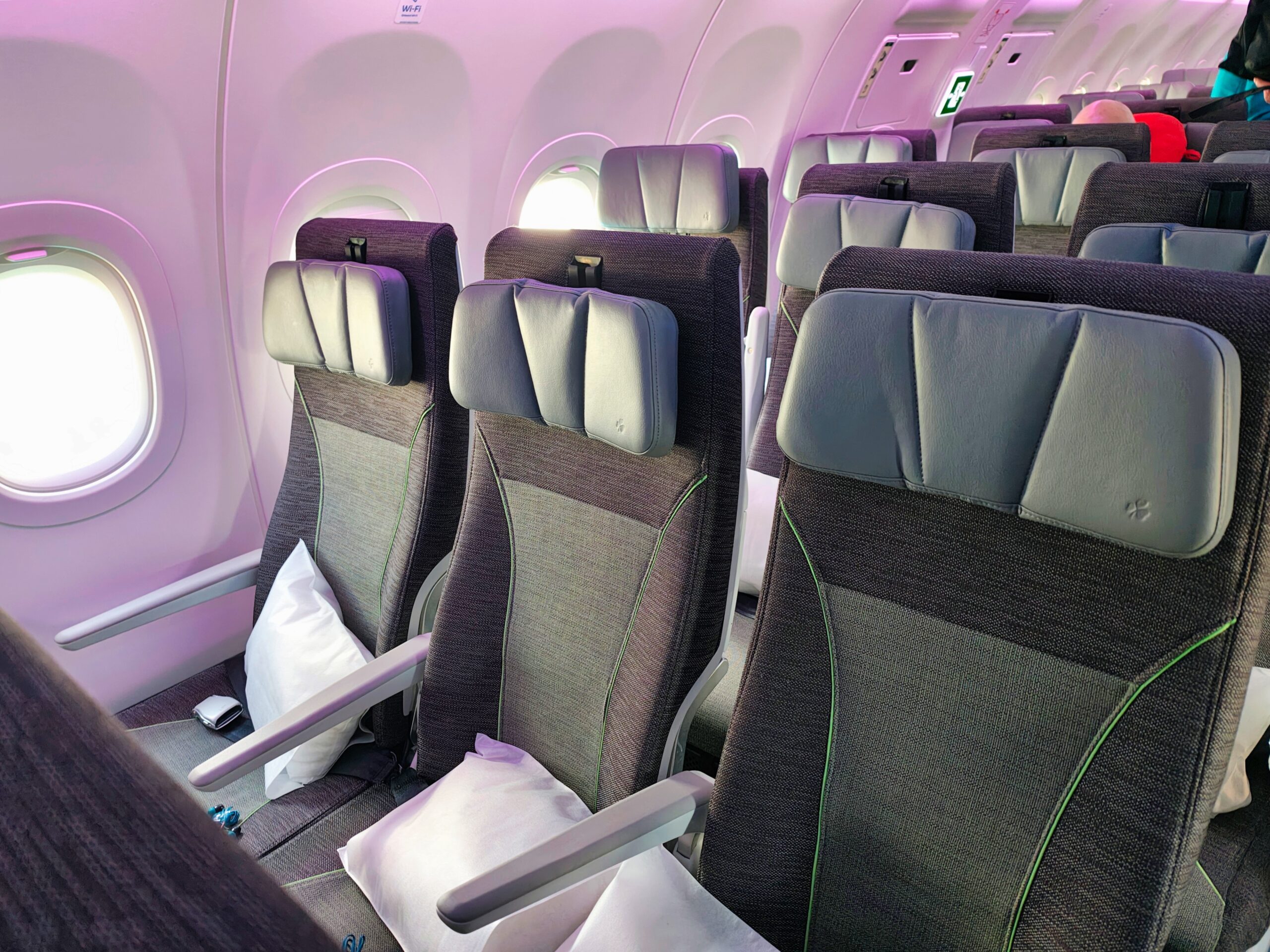
Aer Lingus, by comparison, increasingly needs to persuade customers to choose it not only for travel to Ireland, but also for journeys connecting through Dublin to somewhere else in Europe – in a manner that’s not purely about ticket cost.
The Airbus A321LR and XLR have made it less risky to add new dots to the map. They have not removed the commercial risks associated with operating a broad, seasonal and increasingly competitive North American network in the context of lessening demand.
The Business Class Product Has Stood Still
I have flown Aer Lingus business class numerous times over the years, and I generally don’t consider it a bad product.
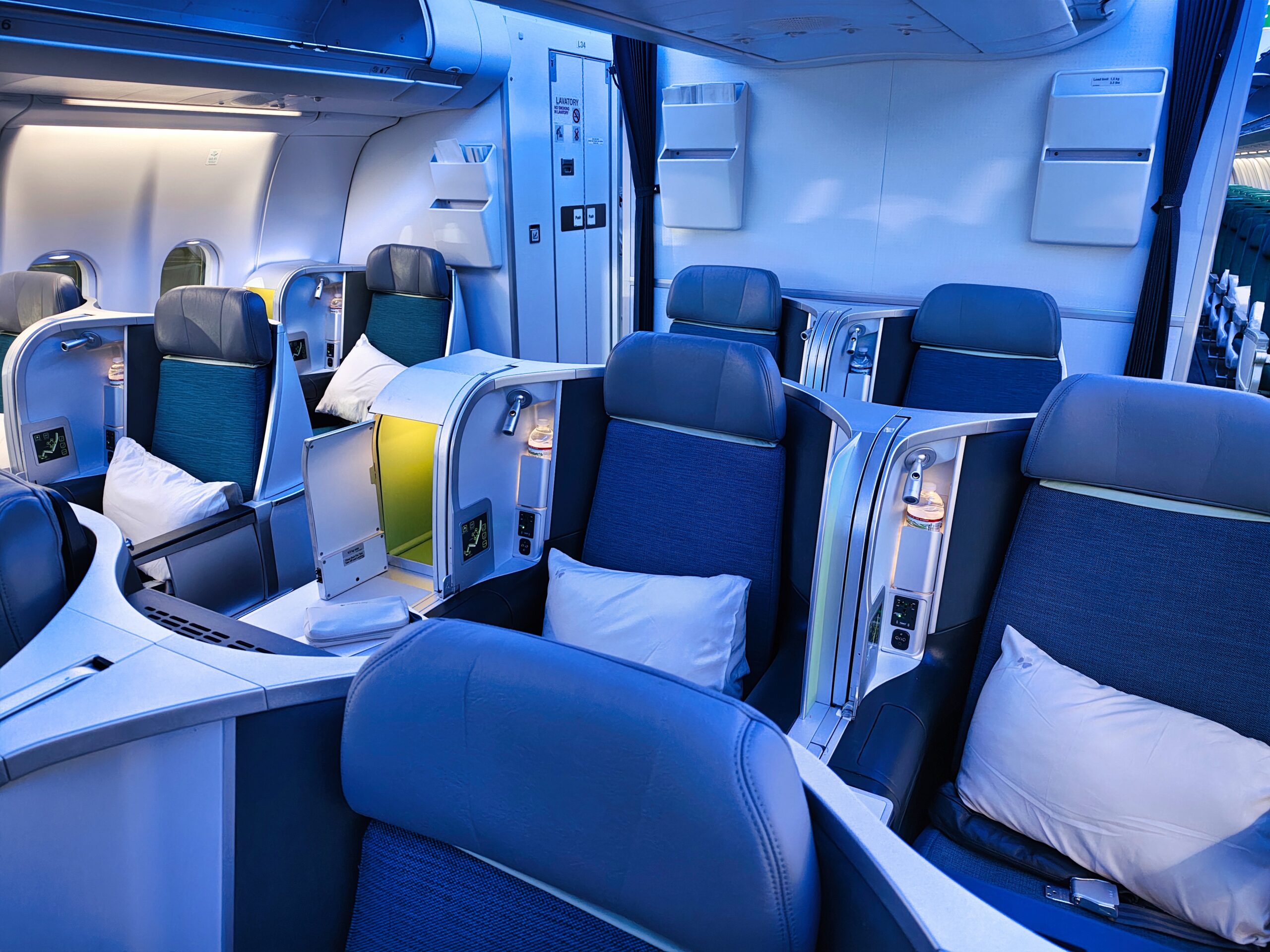
The seats are fully flat, the service is generally warm and decent, the food is respectable and the single “throne” seats remain among the most private and spacious options in the cabin.
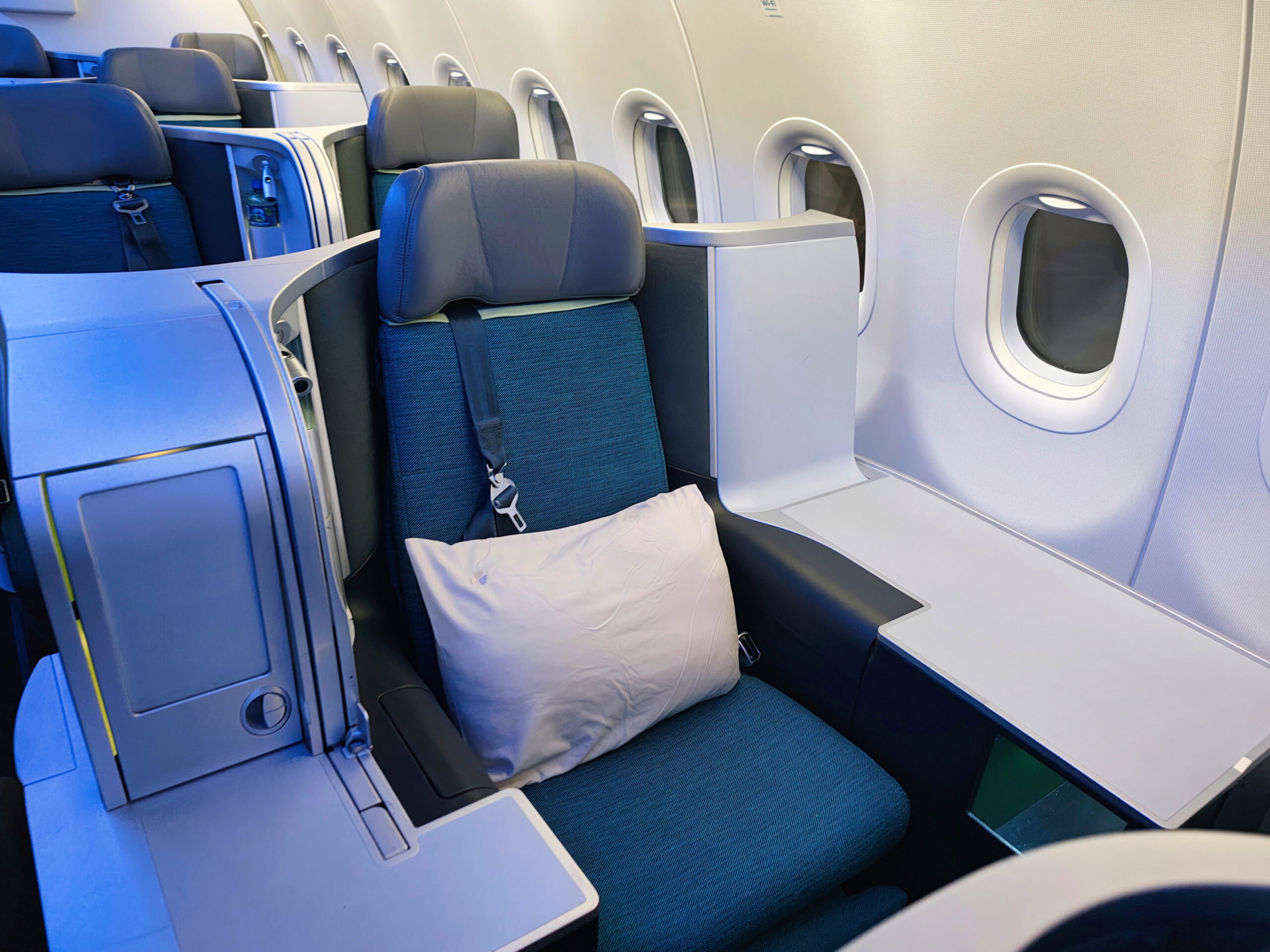
But the fundamental seat is ageing – that same general staggered layout has now been flying for more than a decade. Storage can be limited, privacy varies significantly between seats and the overall cabin increasingly feels a generation behind newer competitors.
This matters because Aer Lingus is not competing in isolation – passengers can choose products such as Delta One, JetBlue Mint, United Polaris, American Airlines’ Flagship Suite and British Airways Club Suite.
Not every aircraft operated by those airlines features its newest product, of course – but add in the benefits above, like loyalty programmes, alliance membership, proper seamless connectivity on the other side of the Atlantic etc. and we may have a problem.
Aer Lingus has continued expanding in one of the most competitive premium markets in the world while offering essentially the same core business class seat it introduced years ago.
Premium Economy Is Years Overdue
Aer Lingus also remains one of the most notable transatlantic airlines without a premium economy cabin. Surely this is not a small or minor omission at this stage?
Premium economy has become such an important part of the long-haul market for the better part now of a decade at least, sitting between an increasingly dense and restricted economy experience and business class fares that can easily cost several thousand euro.
It appeals to leisure travellers who cannot justify business class, corporate travellers whose policies no longer permit it, passengers willing to pay for more space on an overnight flight and frequent flyers seeking a more achievable upgrade or redemption.
Practically all of Aer Lingus’ transatlantic competition offer some form of premium economy across much of their long-haul fleets. It has therefore spent years leaving a substantial gap between economy and business class, despite operating routes that are ideally suited to the product.
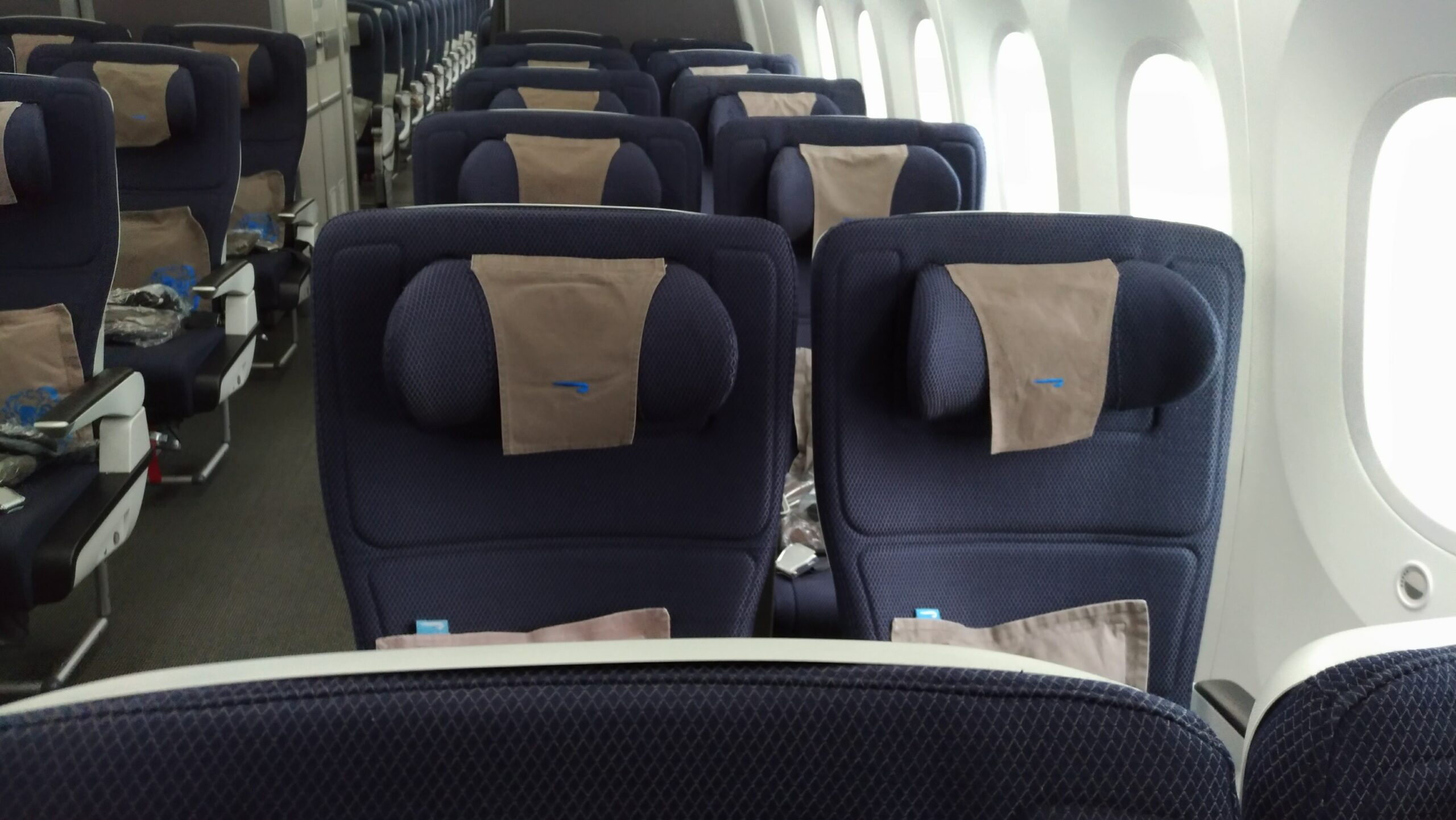
Aer Lingus gives passengers very few choices – they can buy economy, perhaps pay extra for an exit row or preferred seat, or make the enormous financial jump to business class.
The problem now, of course, is that it can hardly be presented as a transformational innovation in 2026. Competitors have been operating and refining the product for years.
Aer Lingus Makes It Too Difficult To Spend More
Something I honestly never thought I’d say – but hear me out. I’d wager good money Aer Lingus already has customers who are willing to spend more, but they absolutely do not make it easy for them to do so.
Take upgrades – both transatlantic, and even within Europe from pure economy to AerSpace.
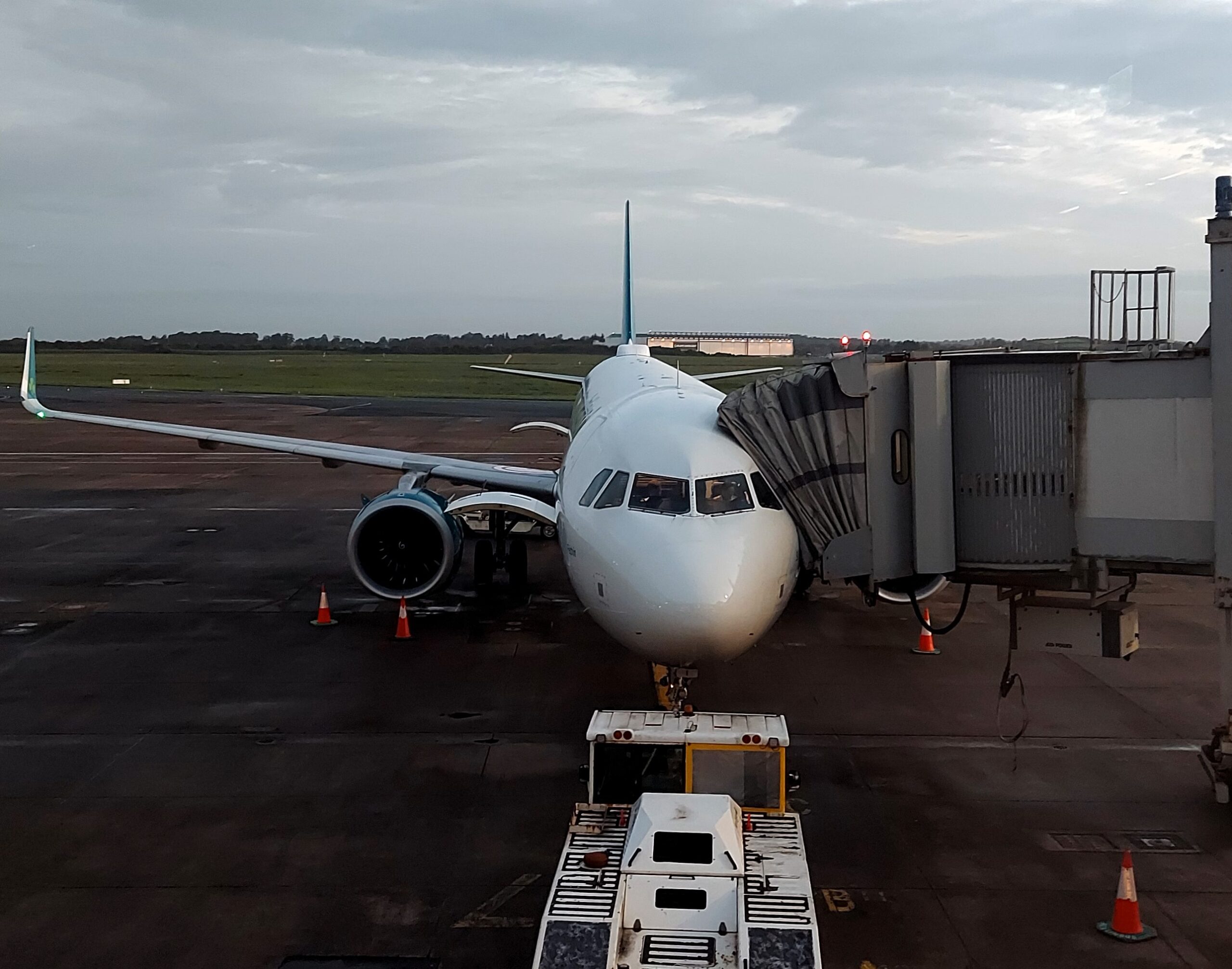
On many transatlantic bookings, Aer Lingus will allow passengers to bid for an upgrade – assuming it’s a very straightforward situation, i.e. all flights ticketed and operated by Aer Lingus and upgrade both directions in one go (from experience, upgrading one direction then locks you out of upgrading the other – this is a great example). Any complication however, or onward connections with a partner, and it becomes a hard no-go.
AerSpace is another great example; you book economy and then decide to treat yourself. Well, you can’t, unless in many cases you cough up the 40 euro change fee along with the fare difference. Why make things so difficult?
An even more frustrating inconsistency applies to seat selection, particularly on bookings involving Avios, partner airlines or tickets issued through different channels.
The issue is not a lack of seat fees – it’s that the airline has adopted much of the charging without always creating the smooth retail experience that makes those charges commercially productive.
There are similar opportunities in short (and I would argue, long)-haul catering. Aer Lingus sells food and drink from the trolley (and offers a complimentary meal and 2 beverages on long-haul), but it has never developed a substantial pre-order meal proposition. Passengers could be allowed to reserve more premium meals before departure, guaranteeing availability while giving the airline better information about demand and reducing waste.
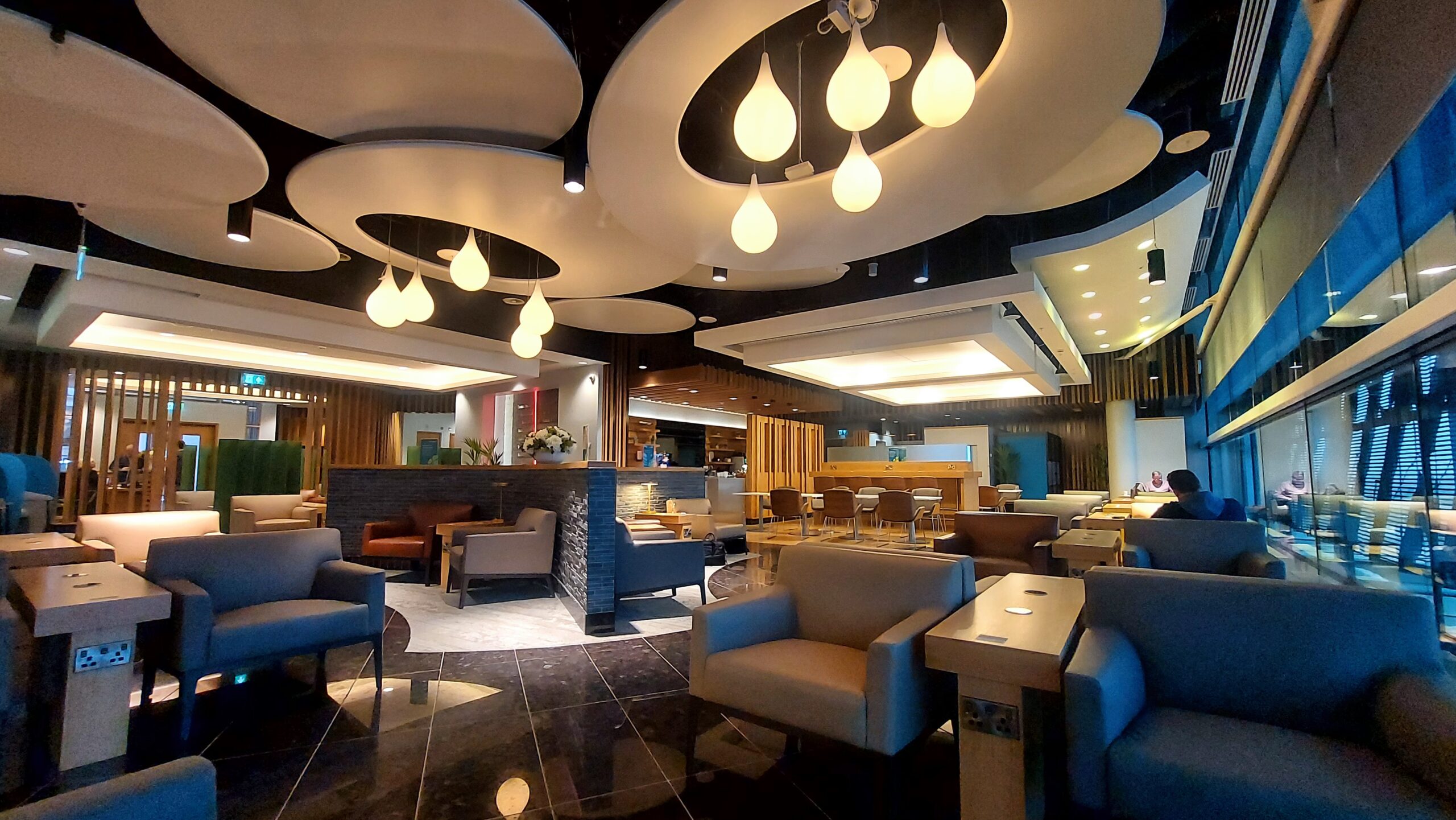
It could also then offer more meaningful bundles involving meals, Wi-Fi, lounge access, fast track, seat selection, and baggage. Instead, today, many of these products exist as disconnected extras, available through different processes and with varying levels of consistency.
It’s a funny one – I’ve often thought of Aer Lingus as not lacking ancillary revenue opportunities, but instead lacking proper ancillary merchandising.
A Business Class Journey Without Business Class
Perhaps the biggest weakness in Aer Lingus’s connecting proposition is what happens after the transatlantic flight lands in Dublin, or in the US.
A passenger can buy a business class ticket from North America through Dublin to a destination such as Frankfurt, Rome, Paris or Amsterdam. En-route, they receive a fully flat seat, enhanced catering, lounge access and a recognisable premium service.
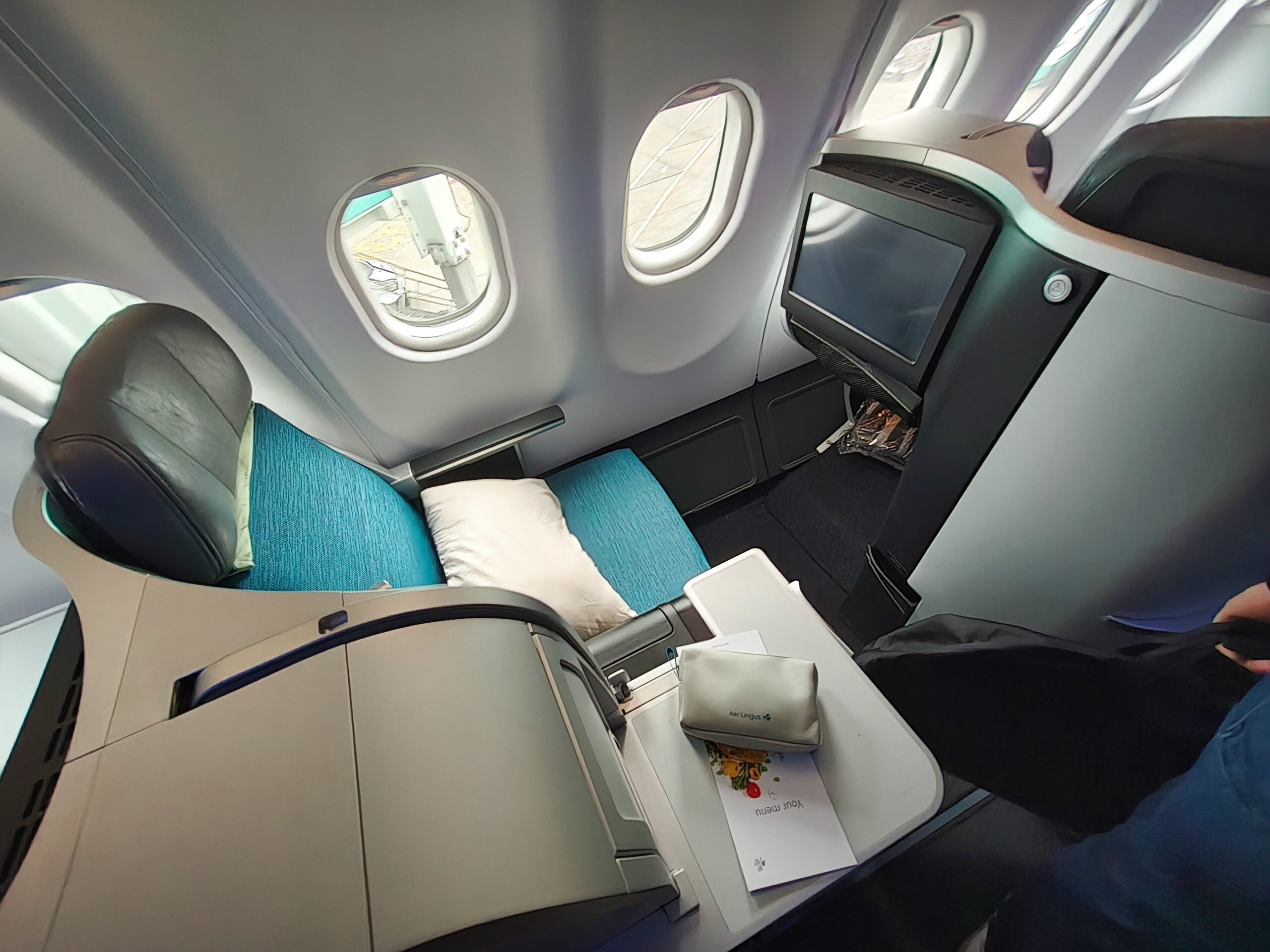
On the European connection, they may well receive an ordinary economy seat and buy-on-board service with little meaningful differentiation from the passengers around them.
Aer Lingus offers AerSpace on selected routes, which generally includes a front-row seat, an empty neighbouring middle seat and additional airport benefits. The issue that it is ‘where available’ on a connecting itinerary, does not offer a consistent European business class cabin across the network, and it is not necessarily what a customer purchasing a through-business-class itinerary expects – or in many cases, even receives.
European business class is already generally a very austere offering – the same seats as economy with the middle seat left empty. Nevertheless, it provides a clearly defined cabin, more personal space, improved catering, lounge access, dedicated service and a consistent ‘perceived premium’ journey.
And this is all entirely Euro-centric; routes sold on partner carriers in the US often default back to economy for the onward connection across the US. The website in particular also almost masks this, exposing it only if you’re being very studious in the selection page.
Aer Lingus is trying to win connecting passengers from airlines that offer business class throughout the entire itinerary while frequently placing its own premium customers into economy for the European and/or US portion.
Not All Cuts Are Equal
Some of the route decisions are easier to understand than others. While it didn’t get much of a chance, Las Vegas is heavily leisure-focused. Denver and Minneapolis face significant seasonality and competition. I could question whether each can support year-round service or whether Aer Lingus expanded too quickly into thinner markets.
Frankfurt is surely one of Europe’s most important corporate and financial centres, however. It is a major aviation hub, an important business destination and a market with substantial links to Ireland.
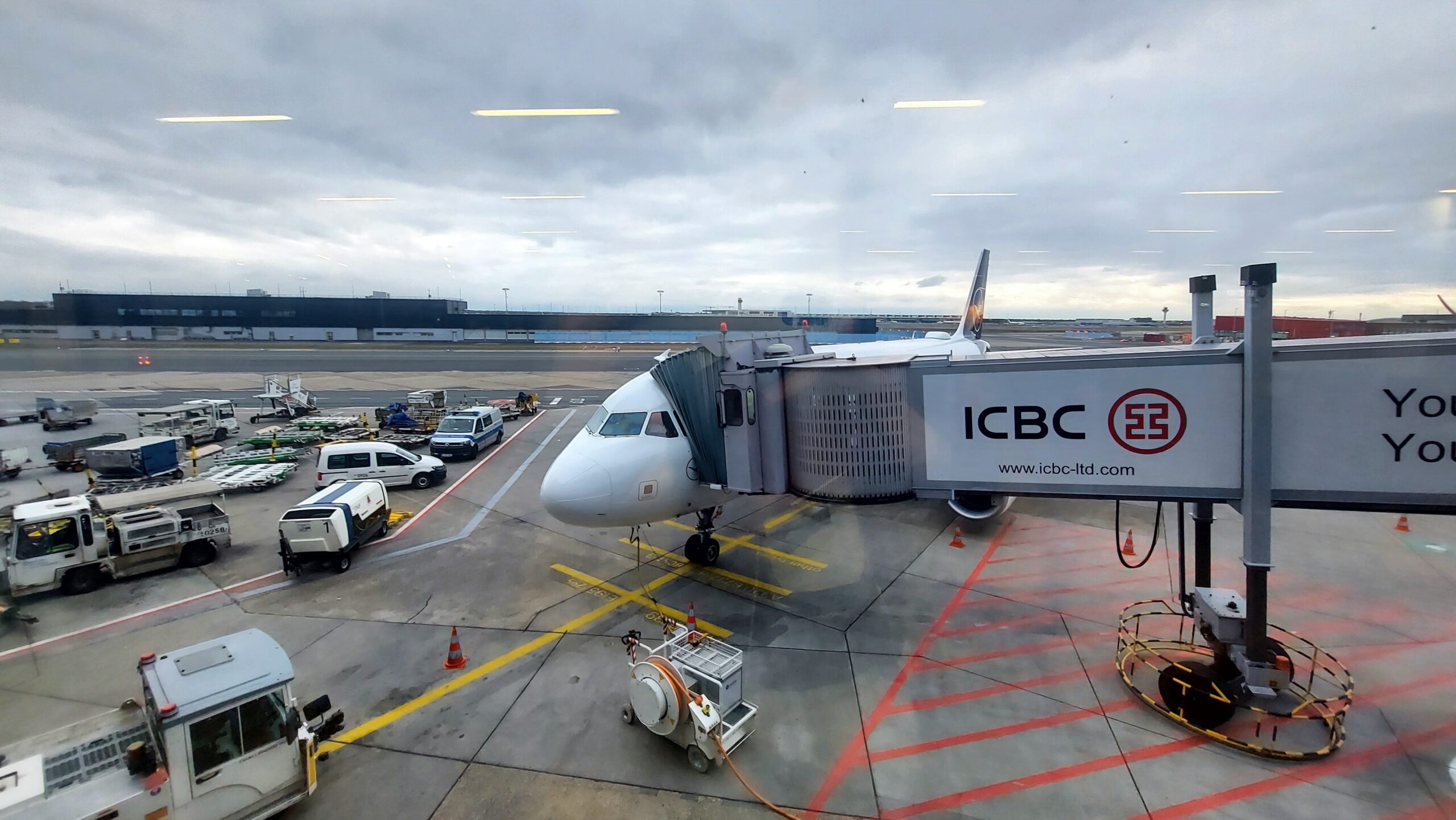
Turning Frankfurt into a summer-only route may reduce losses during weaker winter months, but does it not also permanently damage Aer Lingus’s relevance in the market?
Business travellers need frequency, reliability and year-round availability. A route that disappears for months at a time cannot form part of a company’s dependable travel programme, regardless of how useful it might be during summer.
Once corporate passengers migrate to Lufthansa or another connecting option, the chances of returning when the route reappears feels very unlikely – and feels like it risks a danger of creating a self-reinforcing decline.
Surely an airline seeking to connect Europe with North America should be especially cautious about retreating from one of Europe’s most important business markets.
Seattle raises a similar concern – it has substantial corporate relevance through companies including Microsoft, Amazon and Boeing, alongside wider technology and aviation industries. Reducing it to summer-only may therefore make perfect sense within a spreadsheet looking at immediate route profitability – but it also signals to corporate travellers that Aer Lingus cannot be relied upon as a year-round option.
Those passengers will establish alternative patterns through London, Amsterdam, Paris, Frankfurt, Reykjavik or other US hubs. Corporate travel programmes will be structured around airlines that operate throughout the year.
The External Pressures Are Real
I’m not saying of course that the ‘problems are all imaginary’ – I’ve no doubt they’re not, and I’m writing the above with the kindest intention, as a regular passenger viewing the actions of home carrier understanding well their product, experience, shortfalls, and where I know myself I’d be willing to spend more if I was able to.
Fuel costs have increased. Competition across the Atlantic is intense. Winter long-haul flying can be extremely difficult to operate profitably, and IAG has other airlines competing for the same aircraft and investment.
Network rationalisation may therefore be entirely sensible. Not every route added during a period of expansion deserves to be protected forever, and not every part of the airline’s cost base is automatically efficient.
My critique is that Aer Lingus appears to be responding to a revenue and competitiveness problem primarily through subtraction, while the promised investment in customer experience that ultimately would command higher spend remains mostly unspecified.
Keen to hear other opinions or viewpoints – drop me a comment below!