

EU’s Entry/Exit System – Wait, Did We Make Border Control Worse?
I should start this article by saying that I don't have any fundamental objection to biometric border controls, or to improving the Schengen areas antiquated stamps-as-a-control mechanism.
The problem is, I've travelled through enough countries where facial recognition and automated passport controls make entering or leaving remarkably painless that the principle behind the EU's new Entry/Exit System (EES) seems entirely reasonable – and yet, at least in these opening months, that’s not at all what we seem to have achieved.
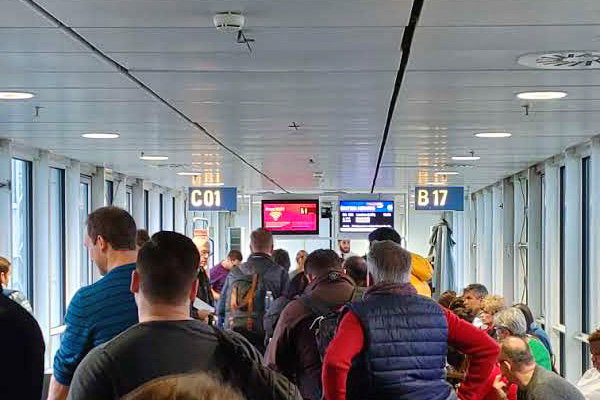
The problem is that having now experienced EES more or less first-hand through travelling with my non-EU wife across several countries, I'm increasingly convinced that the problem isn't simply that EES has had a difficult rollout – I think the passenger process, and the experience as being implemented, is fundamentally flawed.
And somehow, in trying to modernise Europe's borders, we appear to have designed an arrivals and departures procedure more convoluted than many of the systems EES was supposed to improve upon, and much more complex than any other similar attempt elsewhere, notwithstanding the size and inherent complexity of the EU.
What Actually Is EES?
The Entry/Exit System, or EES, is the EU's new automated border system for registering non-EU nationals travelling for short stays across the external borders of the Schengen area.
It records passport information, entry and exit information, a facial image and fingerprints, replacing the much-beloved stamps traditionally placed in passports by border officials inbound and outbound. Importantly, full biometric enrolment isn't actually supposed to happen from scratch every time you travel. Once someone's details are recorded in EES, subsequent crossings should involve verification of the biometrics already held rather than establishing an entirely new record.
In theory, that should ultimately make border control faster. In practice, based on what I've now seen implemented, I'm struggling to understand how.
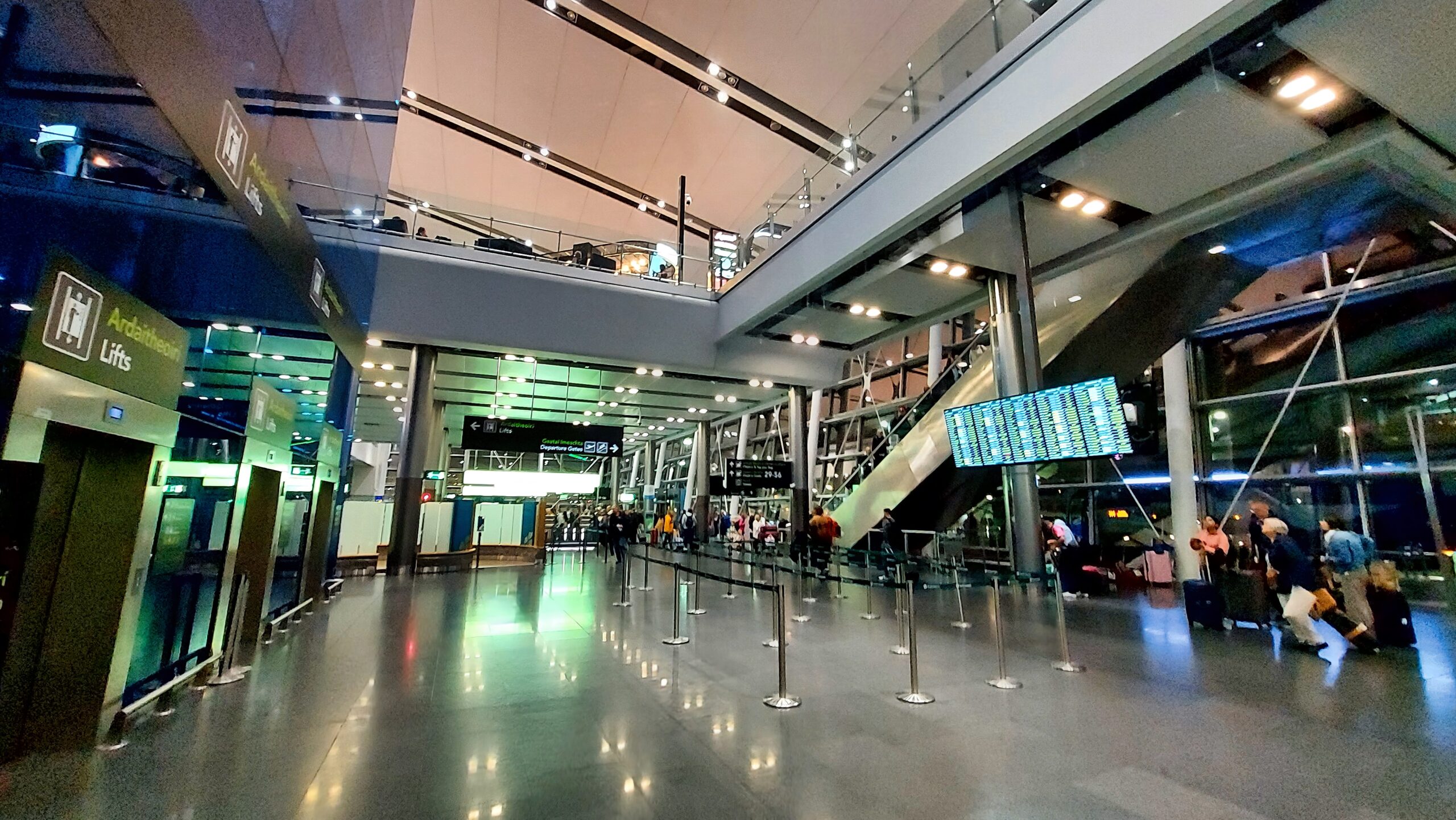
Munich: EES, Meet The Real World
My first proper encounter with the system came travelling through Munich back in late April, with Vannesha, where it quickly became apparent that there is a considerable difference between how this process looks on an EU flowchart, and how it works when hundreds of actual passengers arrive at an airport, and in turn, an existing airport already tight for space has to try and accommodate the necessary pieces of this new system.
There were kiosks. There were automated gates. There were border control agents, as usual, at manned counters. There were relatively ignorant, clueless airport staff attempting to explain which combination of these everyone was supposed to use.
Then, despite having gone through the new system when arriving, we reached passport control (via a kiosk, yet again) on departure and discovered that the system was down the day we arrived, and there was no record of the inbound arrival – and no stamp to fall back on.
Instead, presumably many millions spent later, we eventually had to retrieve our own flight booking from e-mail and show when we'd arrived – for which Vannesha received an unmatched outbound passport stamp, and a meaningless promise that the system was supposed to be back ‘up’ the next day. Great.
At which point it becomes difficult not to ask the obvious question: what exactly has been achieved here, at this point in time?
We've replaced a border official looking at a passport and applying a stamp; with a passenger interacting with a kiosk, providing biometric information, potentially attempting to use an automated gate, potentially being rejected by it, speaking to an official anyway, now having to prove by ourselves that we’d arrived when we’d arrived, and – when the technology fails – reverting to the passport stamp we were supposedly eliminating.
Progress!
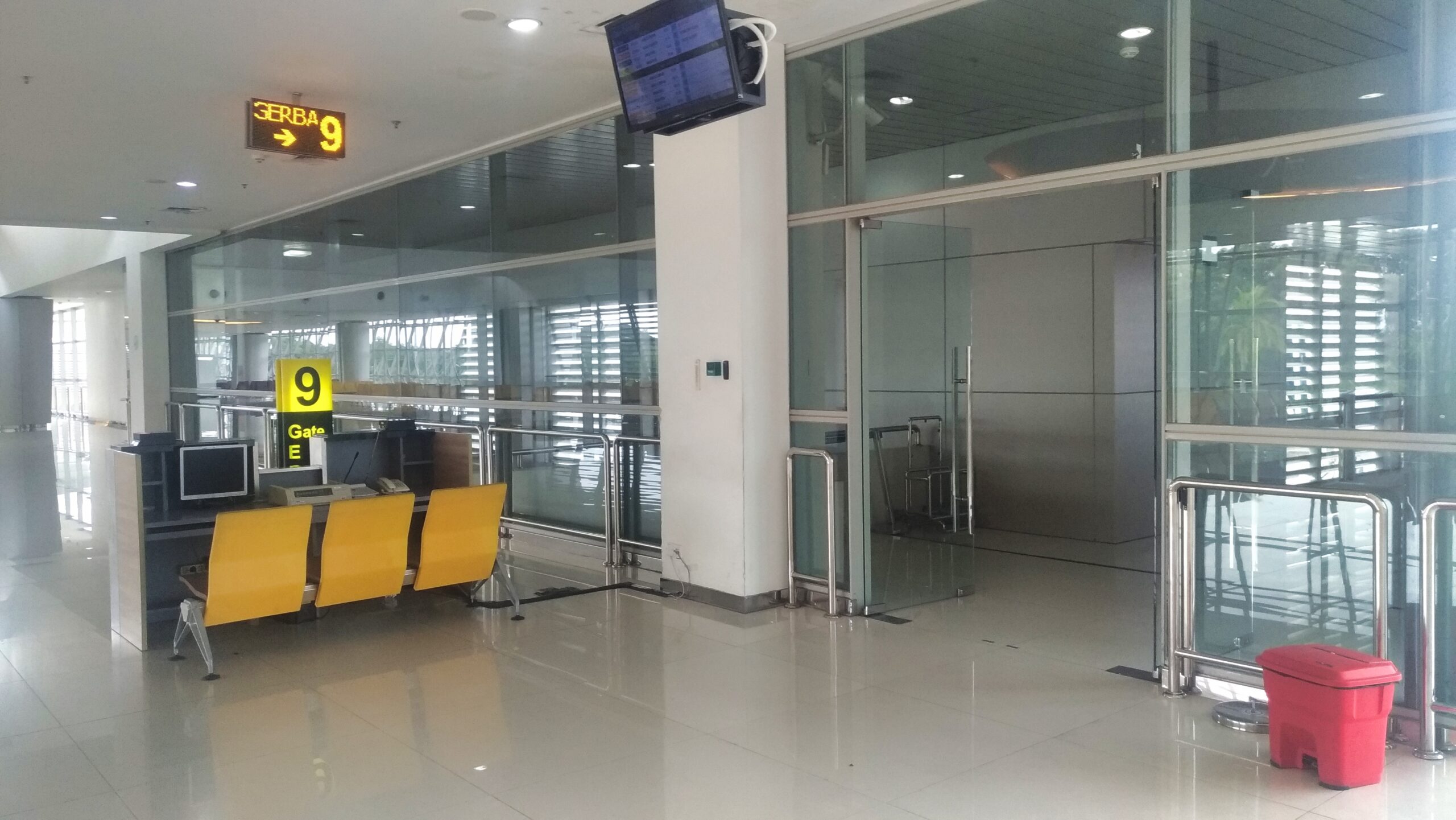
Brindisi Somehow Made It Stranger
Our next encounter with EES was in Brindisi.
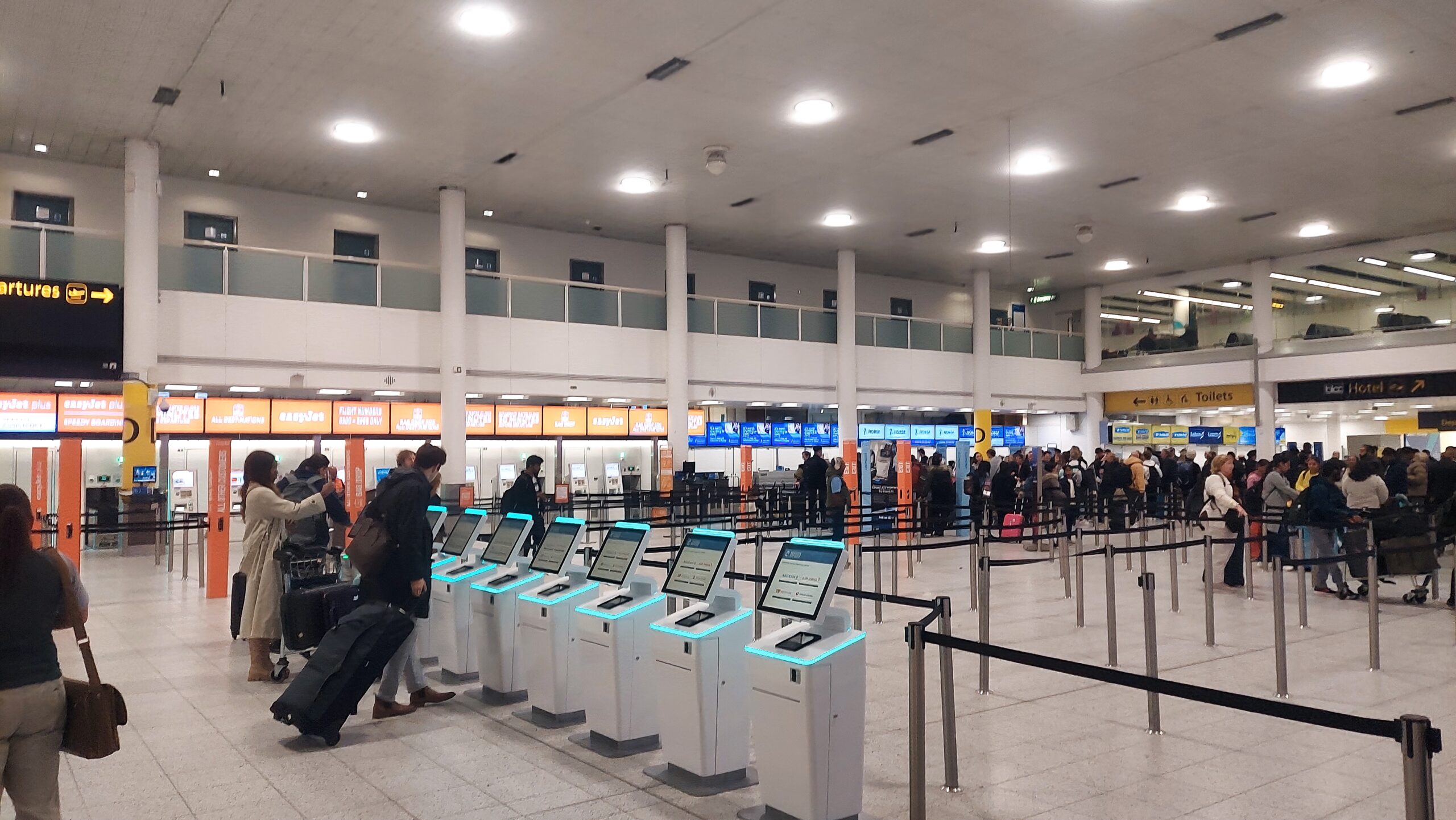
In a show of how hard airports have struggled to find a home for the multitude of new kiosks, the inbound kiosks were positioned haphazardly en-route to the immigration counter, while outbound they were positioned right behind an escalator passengers (including ourselves) had just descended from security – hardly the most intuitive place for equipment that many passengers are apparently required to interact with before reaching passport control.
More confusingly, the process wasn't even identical to Munich – different questions appeared to be asked. Once passengers had completed the kiosk process, airport staff seemed determined to funnel everyone towards biometric e-gates, which then rejected Vannesha and a handful of others – ultimately redirecting back to the lone, single, manned counter which now had its own lengthy queue of EU passengers funneled into it by one of the airport staff.
Have border control authorities at this stage wrongly seen this as an opportunity to scale down manned counters? I strongly suspect so in some cases.
On departure from Brindisi there were three officers, one of whom was spending considerable time trying to persuade passengers to use the automated gates instead in the queue line, and insist on ‘try again’ even when it had been tried twice unsuccessfully, once again.
This, to me, highlights one of the most fundamental problems with EES – automation only increases capacity if the automation actually works.
If a passenger completes a kiosk process, gets directed towards an automated gate, gets rejected by the gate and subsequently requires manual intervention, we haven't automated border control, we've simply inserted additional steps, cost and complexity before border control.
Why Are We Making Passengers Do So Much?
This is the part of EES I find hardest to understand.
Biometric border control itself is hardly revolutionary technology – you can be out of Singapore Changi airport in seconds, even as a first-time visitor, using only an eGate. After your first initial visit, it’s the same story in the UAE – one eGate, several seconds, and done.
Automated passport gates, facial recognition and biometrics have existed for years. The obvious part should have been making all of this technology effectively invisible, and greatly improving speed, to the passenger.
Instead, the EU has made the passenger an active participant in operating the system; Find the correct kiosk. Scan the passport. Answer questions. Present for biometrics. Move onwards. Potentially use another biometric gate. Potentially get rejected. Potentially join another queue. Potentially speak to a border official anyway.
And then repeat at least part of the process when leaving.
Why? Why does the biometric capture or verification need to be a distinct passenger activity at a kiosk rather than something integrated into the border control process at either a counter or an eGate? It’s been achieved elsewhere – why only in Europe do we need multiple kiosks, that apparently, as of now, need to be visited on every arrival and departure?
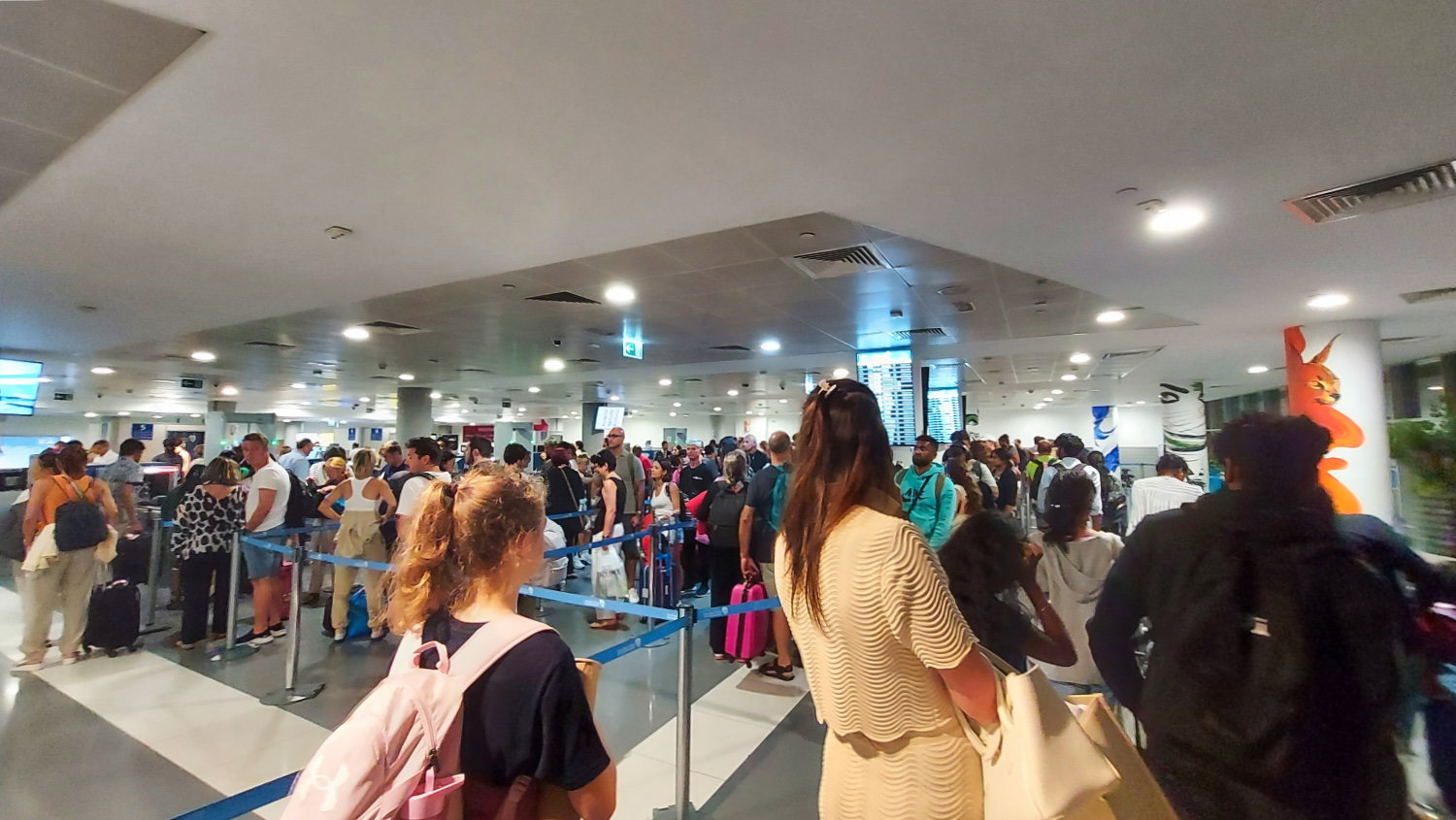
We've Also Managed To Complicate EU Family Travel
There's another, slightly more niche part of this that has particularly irritated me because of my own circumstances.
EU free-movement rules give qualifying non-EU family members travelling with EU citizens particular rights at the border. In our experience before EES, travelling together and presenting ourselves together to EU-line border control has generally worked remarkably well.
EES now seems to have created an operational process that struggles to accommodate that concept – the legal rights haven't simply disappeared because someone installed a biometric kiosk. But practically, airports are now separating passengers much earlier in the process and in a distinctly more segregated way, according to whether they need EES processing, directing them towards different kiosks, gates and queues.
The result is that something which previously worked intuitively – an EU citizen approaching the border together with their non-EU spouse – can now clash with an airport's physical passenger flow before you ever get near the border official. Airport staff meanwhile are generally clueless to these complexities – identifying anything other than a burgundy passport as needing the non-EU line.
This is troubling to me both personally, but more broadly; the EU's own guidance recognises specific rights for non-EU family members accompanying EU citizens. Some immediate family members holding qualifying residence cards are actually exempt from EES altogether.
Yet an airport employee standing beside an escalator trying to send hundreds of passengers towards various machines is unlikely to conduct a nuanced assessment of EU free-movement law.
This Isn't Just My Experience
It would be easy to dismiss Munich or Brindisi as teething problems if EES were otherwise sailing along successfully. It very publicly isn't.
Airports and airlines warned before full implementation that EES was already producing excessive waits, identifying border-control understaffing, unresolved technology problems and limited real-world testing or phased release as real concerns.
There have subsequently been widely reported queues measured in hours rather than minutes at some European airports, with some just suspending EES entirely for summer.
That makes the phrase “teething problems” increasingly difficult to accept – at some point, if a system repeatedly produces queues because it requires more passenger processing time, more equipment, more staff intervention and more fallback procedures than the system it replaced, then it feels like the problem isn't simply implementation as much as fundamental design.
How Was This Not Discovered During Testing?
EES wasn't sprung upon Europe unexpectedly – it was delayed repeatedly. It then received a progressive six-month rollout before becoming fully operational.
So how did we arrive at April 2026 with such obvious passenger-flow and -experience problems still unresolved?
Surely one of the purposes of a phased implementation is to discover exactly these problems before exposing the entire Schengen external border to them; take several airports of varying sizes and passenger counts, run the process during peak and off-peak periods, ensure representative passenger groups; families, elderly, those unfamiliar with biometrics, EU citizens with non-EU family members, turn off or disable the system and see how that can be mitigated, have eGates become deliberately disconnected, figure out what happens when an inbound arrival record can’t be located.
These aren't obscure edge cases – they are entirely predictable scenarios in international aviation.
And ETIAS Hasn't Even Arrived Yet
This is where things could become even more interesting; ETIAS – the European Travel Information and Authorisation System – is still to come.
It is different from EES. ETIAS is a pre-travel authorisation for eligible visa-exempt travellers, whereas EES records and verifies border crossings and biometrics.
So technically they are separate systems. To a passenger, however, they're going to become part of the same journey and likely indistinguishable.
Apply for authorisation before travel; arrive in Europe; find the appropriate EES process; interact with a kiosk where required; complete biometric verification; try the automated gate; potentially get redirected; pass border control; then do the relevant EES verification again when leaving.
There may be legitimate security rationale behind both systems, but passenger experience doesn't care how many different EU regulations or databases sit behind the journey.
Adding ETIAS to an EES process that already appears operationally inconsistent across Europe therefore makes getting EES right considerably more urgent.
EES Needs A Better Passenger Process
There's an understandable temptation whenever a massive technology programme launches badly to argue that it simply needs time; staff will become more familiar, passengers will learn what to do in future, airports will get more kiosks.
Some of that probably will happen, though I’m not convinced it solves the core problem.
If the solution to EES queues is more kiosks, more staff directing passengers towards those kiosks, more border officials dealing with passengers rejected by automated gates, more signs explaining the process and a mobile application allowing passengers to perform part of the process themselves before travelling, it seems reasonable to question whether we've actually designed an efficient system.
Europe has somehow taken technologies that elsewhere can make border crossings virtually invisible and assembled them into a process involving kiosks, questionnaires, biometrics, e-gates, manual fallbacks and visibly confused passengers and staff.
If this is what EES looks like after years of development, repeated delays, a progressive rollout and several months of full operation, I'm increasingly unconvinced that we're simply witnessing teething problems.
Keen to hear other experiences; particularly from anyone who has now encountered EES at several different European airports. Has it become progressively smoother, or is everyone else finding the implementation as wildly inconsistent as we have?